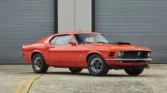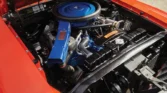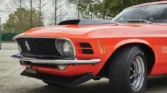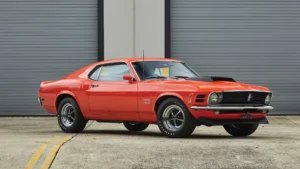
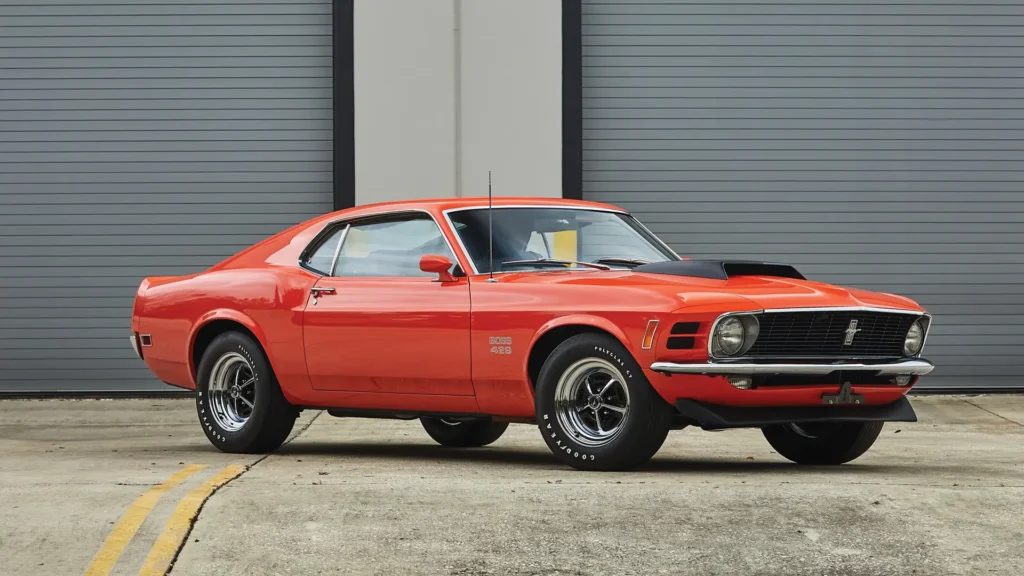
In the late 1960s, facing stiff competition in NASCAR from Chrysler, Ford developed a new 429-cubic-inch V-8 with all-new free-flowing cylinder heads, an aluminum high-rise intake manifold, a 735 CFM Holley carburetor, 11.0:1 compression, header-style exhaust manifolds, and a beefy four-bolt main block. It was conservatively rated at 375 horsepower.
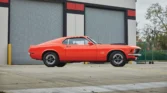
When dropped into the Mustang, it formed the Boss 429, a pony car with an abundance of muscle. To handle the power, the stout “Toploader” four-speed manual transmission…
In the late 1960s, facing stiff competition in NASCAR from Chrysler, Ford developed a new 429-cubic-inch V-8 with all-new free-flowing cylinder heads, an aluminum high-rise intake manifold, a 735 CFM Holley carburetor, 11.0:1 compression, header-style exhaust manifolds, and a beefy four-bolt main block. It was conservatively rated at 375 horsepower.
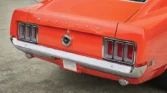
When dropped into the Mustang, it formed the Boss 429, a pony car with an abundance of muscle. To handle the power, the stout “Toploader” four-speed manual transmission and a 3.91:1 Traction-Lok rear axle were mandatory options. Other features included an engine oil cooler, trunk-mounted battery, competition suspension with front and rear anti-roll bars, power front disc brakes, and fat F60 × 15 tires. Unfortunately, upon initial construction of the new Mustang, the new 429 engine simply would not fit. Eager to start the production process and alleviate in-house headaches, Ford entrusted the modification work to local ally Kar Kraft. By cutting and relocating the shock towers, as well as relocating the battery, the new engine barely fit under the hood. However, in keeping with their hot-rod credo, Kar Kraft were able to shoehorn the engine into the Mustang.