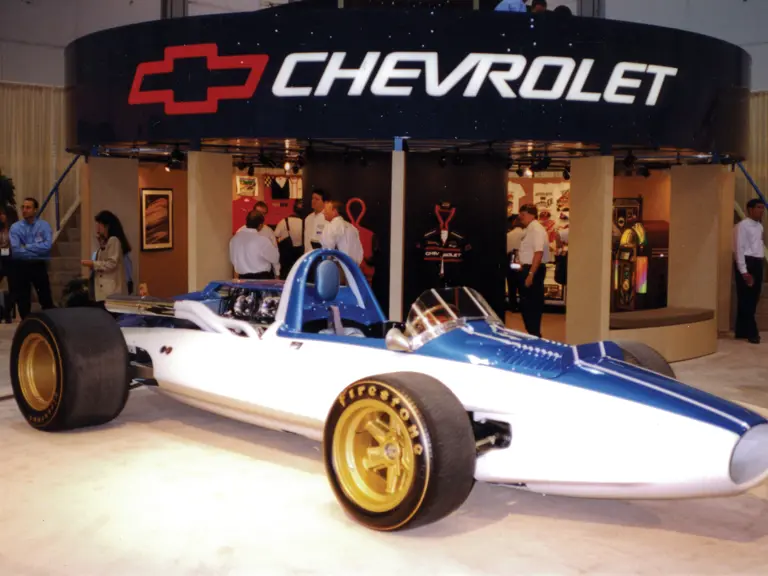
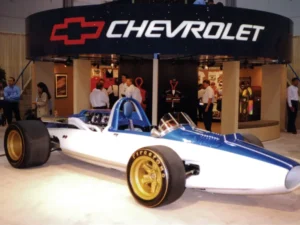
The most important GM Engineering vehicle ever offered at auction Zora Arkus-Duntov’s personal Corvette engineering test bed Used to develop the 1963 Sting Ray’s independent suspension, among other features Formerly of the Briggs Cunningham and Miles Collier collections Restored in its final 1964 cosmetic and mechanical form Innumerable awards and featured in numerous publications The car from which the modern Corvette was born
377 cu. in. OHV aluminum experimental V-8 engine, four-speed…
The most important GM Engineering vehicle ever offered at auction
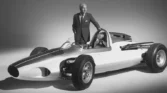
Zora Arkus-Duntov’s personal Corvette engineering test bed
Used to develop the 1963 Sting Ray’s independent suspension, among other features
Formerly of the Briggs Cunningham and Miles Collier collections
Restored in its final 1964 cosmetic and mechanical form
Innumerable awards and featured in numerous publications
The car from which the modern Corvette was born
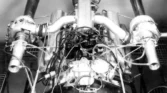
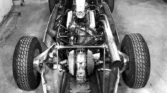
377 cu. in. OHV aluminum experimental V-8 engine, four-speed manual transmission with a lightweight clutch, independent front and rear suspension with variable-rate coil springs, shock absorbers, and a front stabilizer bar, and four-wheel heavy-duty, iron-lined, cast-aluminum finned drum brakes. Wheelbase: 96 in.
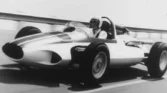
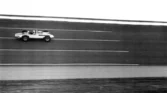
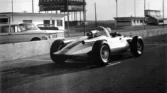
The Chevrolet Engineering Research Vehicle (CERV) was not originally created as a Corvette test bed, nor was it created to do entirely what its name claimed. Ostensibly, it would be a functional single-seat racing vehicle on which Chevrolet engineers could experiment, developing new tricks for the entire range of Bow Tie cars. However, projects in which GM Director of High Performance Vehicles Zora Arkus-Duntov, was involved generally had an ulterior motive. In this case, it was that CERV could actually win races.
Founded in 1982 with a single salvage yard in California, Best Auto Place has grown into a global leader and the premier source for online vehicle auctions.