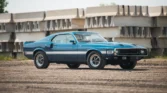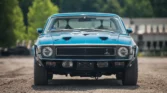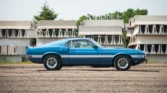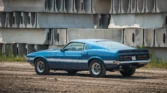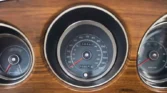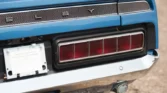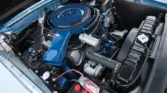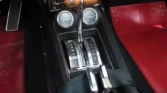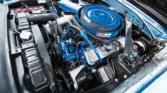
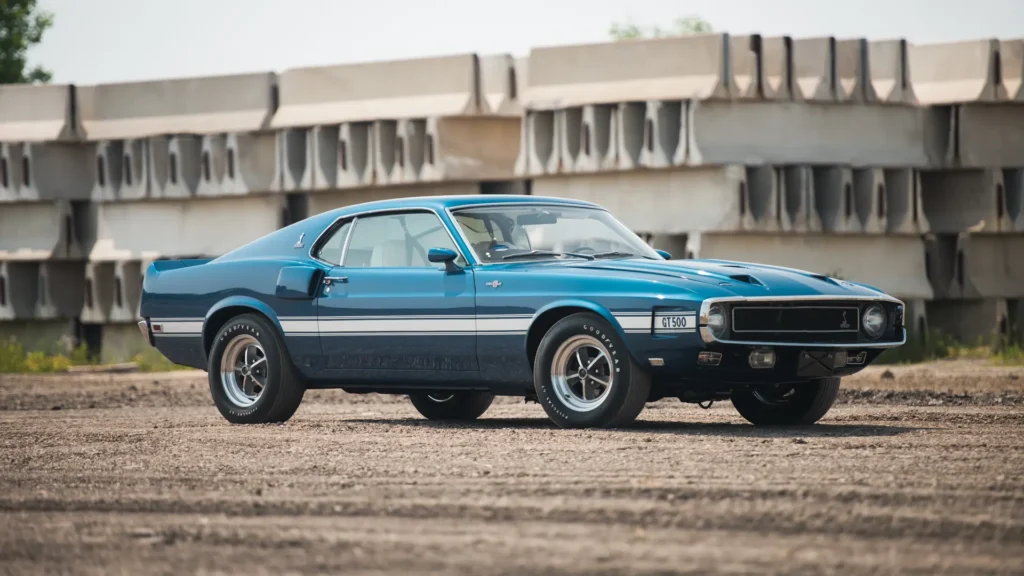
435 bhp, 428 cu. in. Cobra Jet V-8 engine, three-speed Ford C6 automatic transmission, independent front suspension with unequal-length A-arms, coil springs, and an anti-roll bar, live rear axle with semi-elliptical leaf springs and staggered shock absorbers, and power-assisted hydraulic front disc and rear drum brakes. Wheelbase: 108 in.
When Shelby’s GT500 was introduced in 1967, it sat comfortably at the top of the pyramid of Mustang hierarchy. Under the hood lay a gargantuan 428-cubic inch V-8 that…
435 bhp, 428 cu. in. Cobra Jet V-8 engine, three-speed Ford C6 automatic transmission, independent front suspension with unequal-length A-arms, coil springs, and an anti-roll bar, live rear axle with semi-elliptical leaf springs and staggered shock absorbers, and power-assisted hydraulic front disc and rear drum brakes. Wheelbase: 108 in.
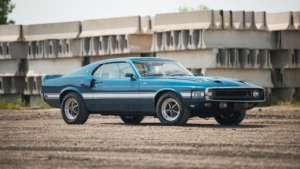
When Shelby’s GT500 was introduced in 1967, it sat comfortably at the top of the pyramid of Mustang hierarchy. Under the hood lay a gargantuan 428-cubic inch V-8 that was topped with twin Holley four-barrel carburetors and could produce 360 brake horsepower. Not only did the GT500 offer more in the way of power, but it also offered more in terms of luxury accoutrements than the slightly less powerful sibling did. Unlike the GT350, the GT500 was also offered in both coupe and convertible body styles.
The last year of production for the GT500 was in 1969, even though some late 1969 models were sold as 1970s. That model year also saw the introduction of a restyled Mustang, and the GT500 received all the same changes. The car’s overall footprint increased, but the styling was markedly more aggressive.